You can still visit Panama City Beach during hurricane season, but two things come first: confirm your rental’s storm cancellation policy, and sign up for county alerts before you leave Kansas. The Atlantic season runs June 1 through November 30, with the riskiest stretch falling between mid-August and mid-October. A calm seasonal outlook doesn’t guarantee a calm trip, so track official forecasts, not headlines.
TL;DR:
- Booking a rental in Panama City Beach during hurricane season requires confirming cancellation policies and evacuation zones before finalizing plans.
- Monitoring official advisories from the National Hurricane Center, local NWS, and Bay County Emergency Management is crucial, especially within one to two weeks of travel.
- Prepare a go-bag with essential items like medications, water, cash, and copies of documents, and keep digital and printed backups of reservations and ID.
- Storm surge risk depends more on storm size, speed, and timing than on category, making evacuation zone checks vital for beachfront properties.
- Travel insurance offers limited coverage if a storm is forecasted or named before purchase; document expenses and confirm policies with property managers beforehand.
Table of Contents
- Hurricane Season in Panama City Beach: Dates, Peak Timing, and What the Outlook Really Tells You
- How to Track Storms and Alerts Before and During Your Trip
- What to Check Before Booking Your Rental
- What to Pack: A Traveler’s Go-Bag for Hurricane Season
- If a Storm Threatens While You’re Already There
- Bay County Evacuation Zones: Why Location Matters More Than Storm Category
- What History Shows About Storm Tracks Near Panama City Beach
- Shelters and Backup Lodging If You Need to Leave the Coast
- How Long the Power Usually Stays Out After a Storm
- Getting Back to Normal: Recovery Resources After a Storm
- Travel Insurance and Hurricane Damage: What Actually Gets Covered
- An Editor’s Take: Planning the Drive From Kansas
- Book Smarter: Storm-Aware Rentals With Direct Owner Contact
- Sources
- FAQ
Hurricane Season in Panama City Beach: Dates, Peak Timing, and What the Outlook Really Tells You
The Atlantic hurricane season officially runs from June 1 through November 30, with activity climbing sharply after mid-August and peaking around September 10, statistically the busiest day of the year for tropical development. That climatological peak matters more for trip planning than any single forecast number.
Each spring, NOAA releases a seasonal outlook predicting how many named storms, hurricanes, and major hurricanes the whole Atlantic basin might produce. NOAA is explicit that this outlook forecasts basin-wide activity, not whether Panama City Beach specifically will get hit. A “below-normal” season can still deliver one devastating landfall, while a busy season can miss the Florida Panhandle entirely.
That distinction shapes how you should plan:
- Don’t cancel or book a trip based on the seasonal number alone.
- Treat the outlook as background context, not a local weather forecast, for weather patterns Panama City Beach travelers actually experience day to day.
- Watch the National Hurricane Center’s short-term products once you’re within a week or two of your travel dates.
- Recheck your rental’s cancellation terms if any tropical system starts organizing in the Gulf or western Atlantic.
The seasonal outlook tells you the odds for the whole Atlantic. The National Hurricane Center tells you what’s coming for the Panhandle. You need both, but the second one is what actually decides your trip.
How to Track Storms and Alerts Before and During Your Trip
Three sources matter more than any app or social media thread: the National Hurricane Center, your local National Weather Service office, and Bay County Emergency Management. Everything else is secondary.
The NHC issues advisories every few hours once a system is active, including the familiar forecast cone. Here’s the part most travelers get wrong: the cone shows uncertainty in the storm’s center position, not the size of the storm or where impacts will occur. The center stays inside that cone roughly 60 to 70% of the time across a five-day forecast, and wind, rain, and surge routinely reach well outside its edges. A storm tracking 80 miles west of Panama City Beach can still deliver tropical storm winds and dangerous surf to your rental.
Set up your monitoring before you leave Kansas, not after you arrive:
- Download the FEMA app or bookmark Ready for preparedness checklists.
- Sign up for Bay County’s local alert system so watches and warnings reach your phone directly.
- Bookmark the NHC’s active storms page and your local NWS office forecast discussion.
- Print a physical evacuation route map in case cell service drops.
Pro Tip: A “hurricane watch” means conditions are possible within a couple of days; a “warning” means they’re expected soon, with little time remaining for preparations. Warnings are your cue to finalize departure plans, not start making them.
What to Check Before Booking Your Rental
Booking a Panama City Beach rental during hurricane season isn’t riskier than booking any other Florida coast, but it does require a few extra questions before you hand over a deposit. Ask these before you book, not after a storm forms.
- What’s the cancellation or relocation policy if a hurricane watch or warning is issued for the area?
- Will you get a refund, a credit, or a shift to different dates, and how far in advance does that decision need to happen?
- What evacuation zone is the property in, and does the owner have a plan for guest communication if evacuation orders come down?
- Is there a local contact number that works even if the office line goes to voicemail during a storm?
Save the answers somewhere you can access offline. A screenshot in your phone’s photo library survives a dead Wi-Fi connection better than an email you’d need to log back into. Direct-booking platforms like Panama City Beach’s own rental listings make this easier because you’re talking to the property manager or owner directly instead of routing questions through a call center that may not know the specific property’s storm policy.
Pro Tip: Get the storm policy in writing, even if it’s just a text message. Verbal promises about refunds tend to evaporate when a property manager is dealing with fifty other guests during an evacuation order.
Keep both digital and printed copies of your reservation confirmation, ID, and travel insurance details. Cell towers and power grids can fail during a significant storm, and a soggy piece of paper in a sealed bag still works when your phone doesn’t.
What to Pack: A Traveler’s Go-Bag for Hurricane Season
Most Kansas travelers pack for sun and sand, not storms — but consulting a travel preparedness checklist with packing and go-bag ideas can help you add a few items to your usual beach bag to stay covered if plans change fast. Add a few items to your usual beach bag and you’ll be covered if plans change fast.
Ready recommends these essentials for anyone traveling through hurricane season:
- A week’s supply of prescription medications in original bottles
- Bottled water and nonperishable snacks for a car ride or unexpected delay
- A portable phone charger or battery bank, plus extra cables
- Cash in small bills, since card readers and ATMs may not work during outages
- Printed copies of your ID, reservation, and insurance cards
If you’re traveling with a pet, pack extra food, any medications, a carrier, and proof of vaccination records. Not every shelter or evacuation-friendly hotel accepts animals, so confirm pet policies for backup lodging before you arrive.
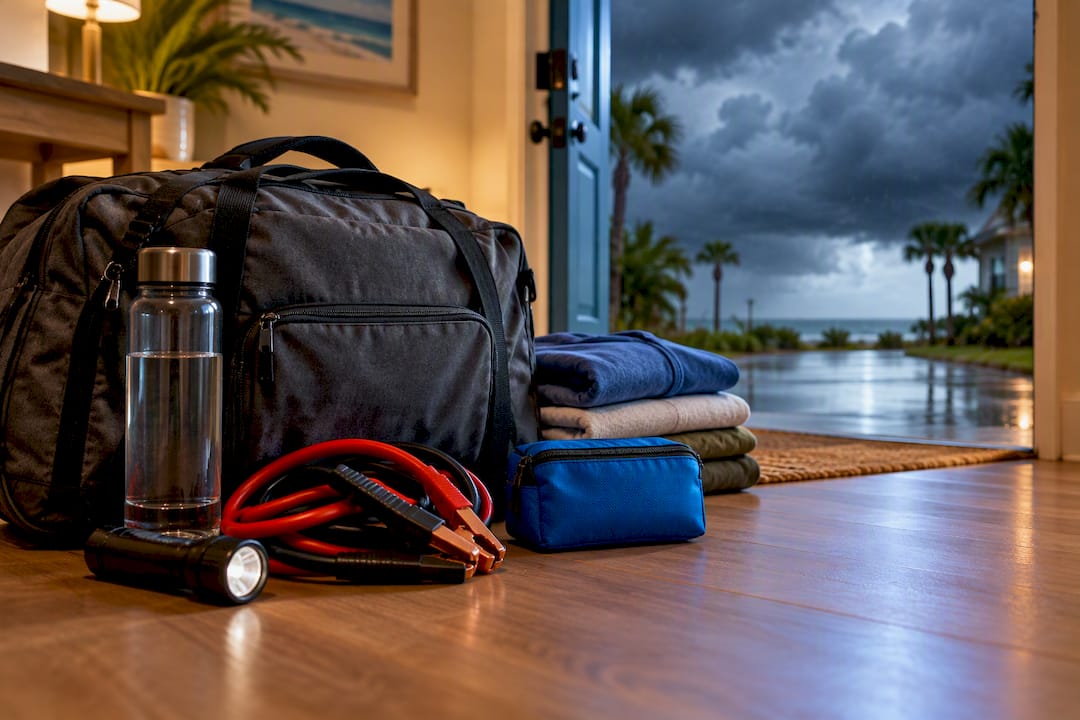
For the drive itself, keep your tank topped off anytime a storm is in the Gulf, even if it’s still days away. Gas station lines get long fast once an evacuation order hits, and a basic roadside kit with jumper cables and a flashlight costs less than one bad afternoon stranded on Highway 98.
If a Storm Threatens While You’re Already There
If a watch or warning gets issued for Bay County during your stay, act on it rather than waiting to see what happens. Here’s the order that matters:
- Follow evacuation orders the moment county officials issue them. Don’t wait for the storm to look scarier on TV.
- Never drive through standing or moving floodwater. Just six inches of moving water can sweep a car off the road, and you can’t judge depth by looking at it from the driver’s seat.
- If you’re not ordered to leave and choose to stay, shelter in an interior room away from windows, and switch your phone to low power mode early to stretch battery life.
- Contact your property manager as soon as conditions allow to confirm next steps, whether that’s relocation help or information about returning.
- Photograph any damage before cleaning up anything, and keep every receipt tied to storm-related expenses for insurance purposes.
Once you’re in the car heading inland, resist the urge to turn back for anything. Evacuation routes clog fast, and re-entry after an evacuation order can take days depending on road and utility damage.
Bay County Evacuation Zones: Why Location Matters More Than Storm Category
Bay County divides its coastline into evacuation zones A through D, with Zone A covering the most exposed coastal and low-lying areas and evacuated first when storm surge threatens. Panama City Beach’s beachfront properties largely sit within these early-evacuation zones, which is exactly why checking your rental’s specific zone matters more than checking the storm’s category on the news.
Storm surge, not wind speed, causes most hurricane fatalities along the Gulf Coast, and surge risk depends on a storm’s size, forward speed, track angle, and whether it arrives at high or low tide. A slow-moving Category 1 storm hitting at high tide can push more water inland than a fast Category 3 that arrives at low tide. Category numbers describe wind. They don’t describe the water that actually threatens beachfront homes and hurricane evacuation Panama City routes.
Check your specific address against the county’s zone map before you book, and again once you arrive if a storm is anywhere in the forecast:
- Search your rental address directly on Bay County’s evacuation zone lookup tool.
- Ask your property manager which zone the home falls in as part of your pre-booking questions.
- If you’re unsure or the property straddles a boundary, call Bay County Emergency Management directly rather than guessing.
What History Shows About Storm Tracks Near Panama City Beach
Panama City Beach sits on a stretch of the Florida Panhandle that has taken direct hits and near-misses over the decades, most notably from Hurricane Michael in 2018, a powerful storm that made landfall east of the immediate beach area but still delivered significant wind and surge impacts along the coast. Hurricane Opal in 1995 and Hurricane Ivan in 2004 also affected the region with major surge and wind events, underscoring that this coastline has real exposure, not just theoretical risk.
Most storms threatening the Panhandle track north out of the Gulf of Mexico after forming or strengthening in the warm Gulf waters, sometimes crossing from the Caribbean first. Because the Gulf is relatively enclosed, storms can intensify quickly in the days before landfall, giving less lead time than an Atlantic-approach storm might. That’s part of why NHC advisories matter more than a forecast you checked a week ago. Conditions in the Gulf can shift fast.
The takeaway for a visiting family isn’t that Panama City Beach is uniquely dangerous. Most seasons pass without a direct hit, and plenty of summers and falls come and go with nothing more than a rainy afternoon. But the region’s history confirms that the risk is real enough to plan around, not ignore. Reviewing when storm activity typically peaks can help you decide whether an August trip or a quieter November week fits your comfort level better.
Shelters and Backup Lodging If You Need to Leave the Coast
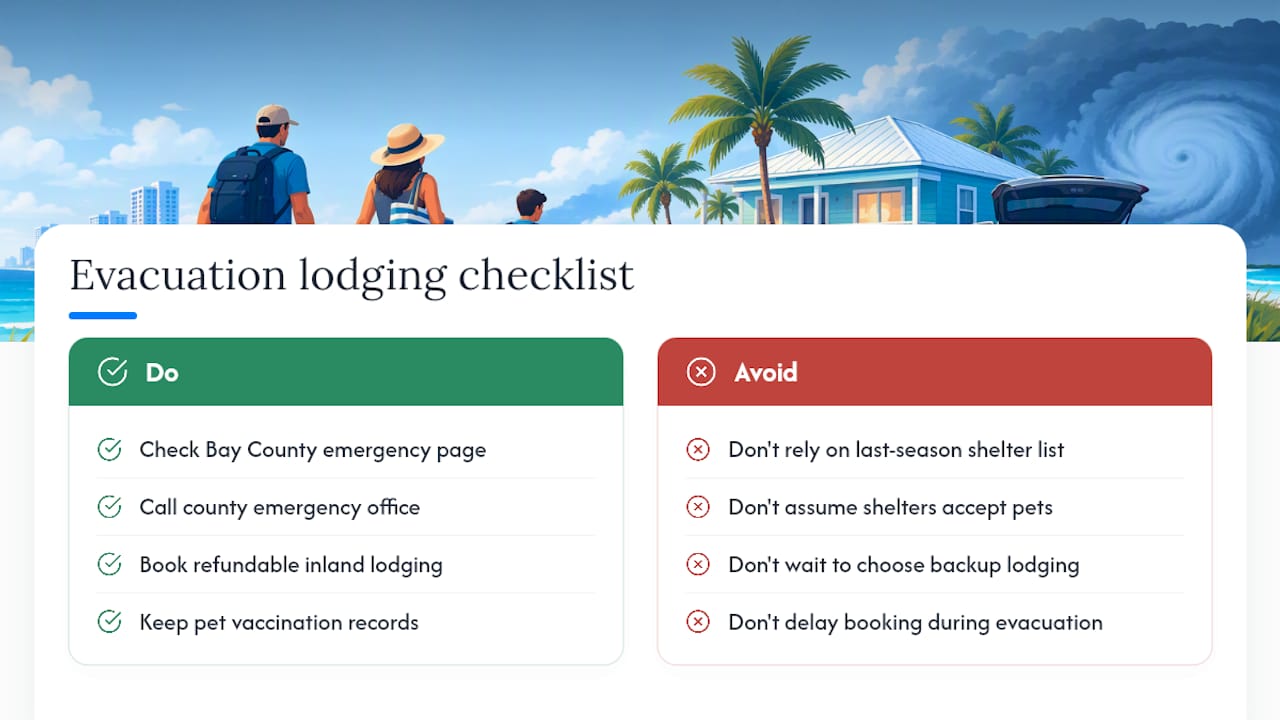
If Bay County issues an evacuation order during your stay, local shelters typically open inland, away from surge-prone zones, and are announced through county emergency communications and local news outlets rather than posted permanently online year-round. Because shelter locations can shift storm to storm based on which buildings are available and staffed, your best move is checking Bay County’s emergency management page or calling their office directly once a storm is approaching, rather than relying on a list from a previous season.
For most traveling families, a hotel or rental well inland, in cities like Dothan, Alabama, or further north into Georgia, is a more comfortable option than a public shelter, especially if you’re traveling with young kids or pets that shelters may not accommodate. Booking flexibility matters here. If you already have a refundable inland reservation lined up before a storm even threatens, you skip the scramble that thousands of other evacuating visitors will be dealing with at the same time.
Pet owners face the tightest squeeze during evacuations, since not every shelter or evacuation hotel accepts animals. Research pet-friendly backup lodging in your target evacuation direction before you ever leave Kansas, and keep vaccination records handy since some facilities require proof at check-in.
The practical move is treating your evacuation plan the same way you’d treat a flight delay plan: decide the backup before you need it, not while you’re already in the car with a dwindling gas tank and a bored six-year-old asking how much longer.
How Long the Power Usually Stays Out After a Storm
Power outage duration after a hurricane in Panama City Beach depends heavily on storm strength and how much tree and pole damage occurs, but even moderate tropical storms can knock out electricity for anywhere from a few hours to several days. Major hurricanes, like the Category 5 Michael in 2018, caused outages lasting weeks in the hardest-hit areas of Bay County, though barrier island and beach-adjacent infrastructure often gets prioritized for repair given the area’s tourism economy.
Gulf Power (now part of Florida Power & Light in this region) and local utilities typically stage crews ahead of a forecast landfall, which speeds up restoration compared to storms that catch a region by surprise. Still, if you’re staying through even a moderate system, expect the possibility of losing air conditioning, refrigeration, and cell signal for at least part of your visit.
This is part of why the go-bag matters more than most vacationers assume. A charged battery bank, some cash, and a cooler with ice can turn a two-day outage from a crisis into an inconvenience. If your rental loses power for an extended stretch, most property managers will proactively offer relocation or a partial refund, but only if you’ve already confirmed that policy exists before you needed it.
Getting Back to Normal: Recovery Resources After a Storm
If a hurricane does affect your stay, recovery in Panama City Beach typically moves faster than visitors expect, since much of the local economy depends on getting the beach and its rental inventory back online quickly. Local officials coordinate road clearing, debris removal, and utility restoration in phases, usually prioritizing main arteries like Front Beach Road and Highway 98 first.
Bay County’s emergency management office posts updates on re-entry timing for evacuated zones, road closures, and boil-water notices if utilities were affected. Checking their page directly, rather than relying on secondhand social media posts, gives you the most current information on when it’s safe to return or when your rental will be accessible again.
If your trip gets cut short, most reputable property managers will walk you through next steps for refunds or rebooking once conditions stabilize. Keep photographing any damage you notice in the unit, both for your own protection and in case questions come up later about deposit returns. The Panama City Beach safety guide covers additional preparedness steps worth reviewing before you rebook a future trip to the area.
Give the destination time. Beaches often reopen well before all repairs are finished elsewhere, and many restaurants and attractions resume operations within days even after a significant storm, since much of the visible tourist infrastructure sits away from the most surge-vulnerable zones.
Travel Insurance and Hurricane Damage: What Actually Gets Covered
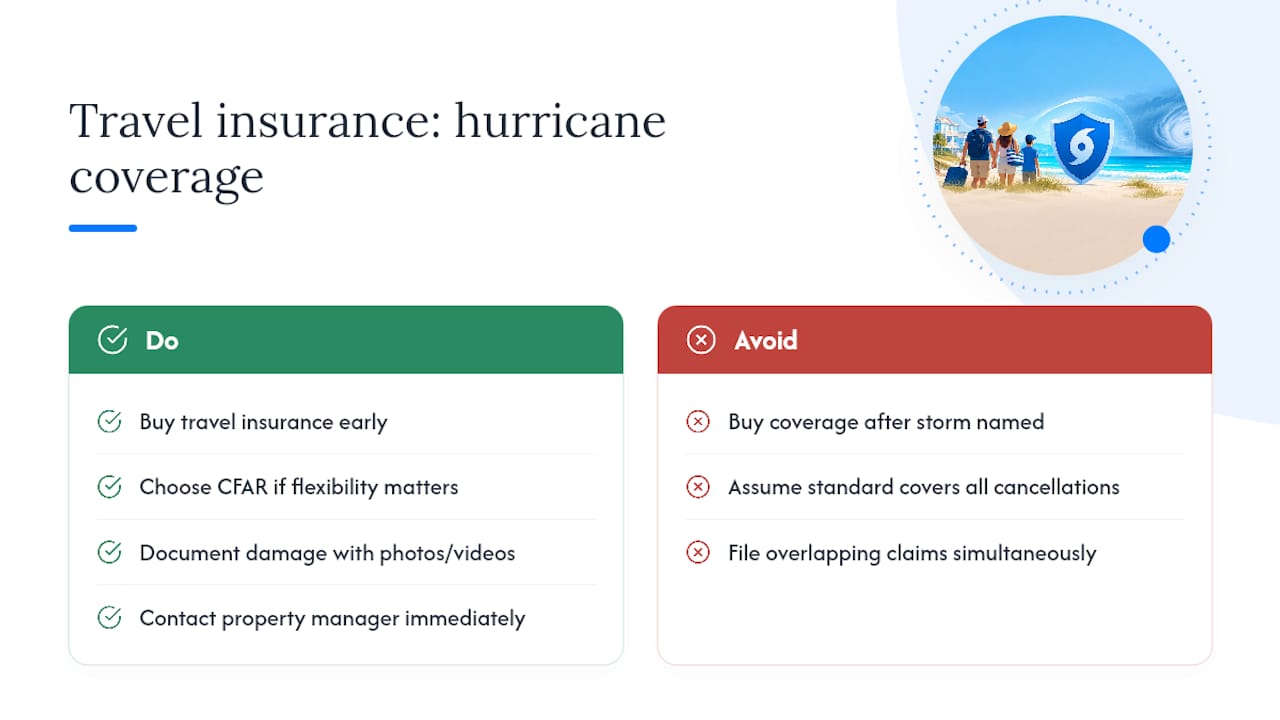
Standard travel insurance policies vary widely on hurricane coverage, and the timing of when you bought the policy matters enormously. Most insurers won’t cover cancellations for a storm that’s already been named or is already forecast at the time you purchase the policy, which is why buying coverage early in your planning, well before hurricane season’s peak, gives you meaningfully better protection than waiting until a system is already spinning in the Gulf.
“Cancel for any reason” policies cost more but offer the most flexibility if you simply get nervous about a forecast, even without an official evacuation order. Standard policies typically only pay out if your destination is under a mandatory evacuation order or your rental becomes genuinely uninhabitable.
For rental damage or loss claims, start by documenting everything with photos and video before you touch or move anything. Contact your property manager immediately, since many have their own insurance processes that run separately from your personal travel coverage. Keep every receipt for any storm-related expense you incur, from a hotel switch to extra gas for an evacuation drive, since insurers typically require itemized documentation rather than a lump estimate.
If your rental’s cancellation policy already promised a refund or credit for storm disruption, file that claim with the property manager directly rather than routing everything through your insurer first. Overlapping claims can slow down both processes unnecessarily.
An Editor’s Take: Planning the Drive From Kansas
Leaving Wichita or Kansas City for the Gulf Coast means you’re already ten to fourteen hours from home, so build in slack. If surge risk becomes possible, leave earlier than feels necessary. Gas and lodging vanish fast along evacuation routes. Book refundable stays for the beach portion of your trip, and keep an inland backup destination in mind before you ever cross the Florida line, so a rising threat becomes a detour instead of a crisis.
— Joe
Book Smarter: Storm-Aware Rentals With Direct Owner Contact
Some vacation rental platforms give you a direct line to the person who manages your rental, so storm questions can get real answers instead of a call-center script. Some sites list beachfront condos, family-friendly homes, and pet-friendly properties you can filter by what your trip needs.
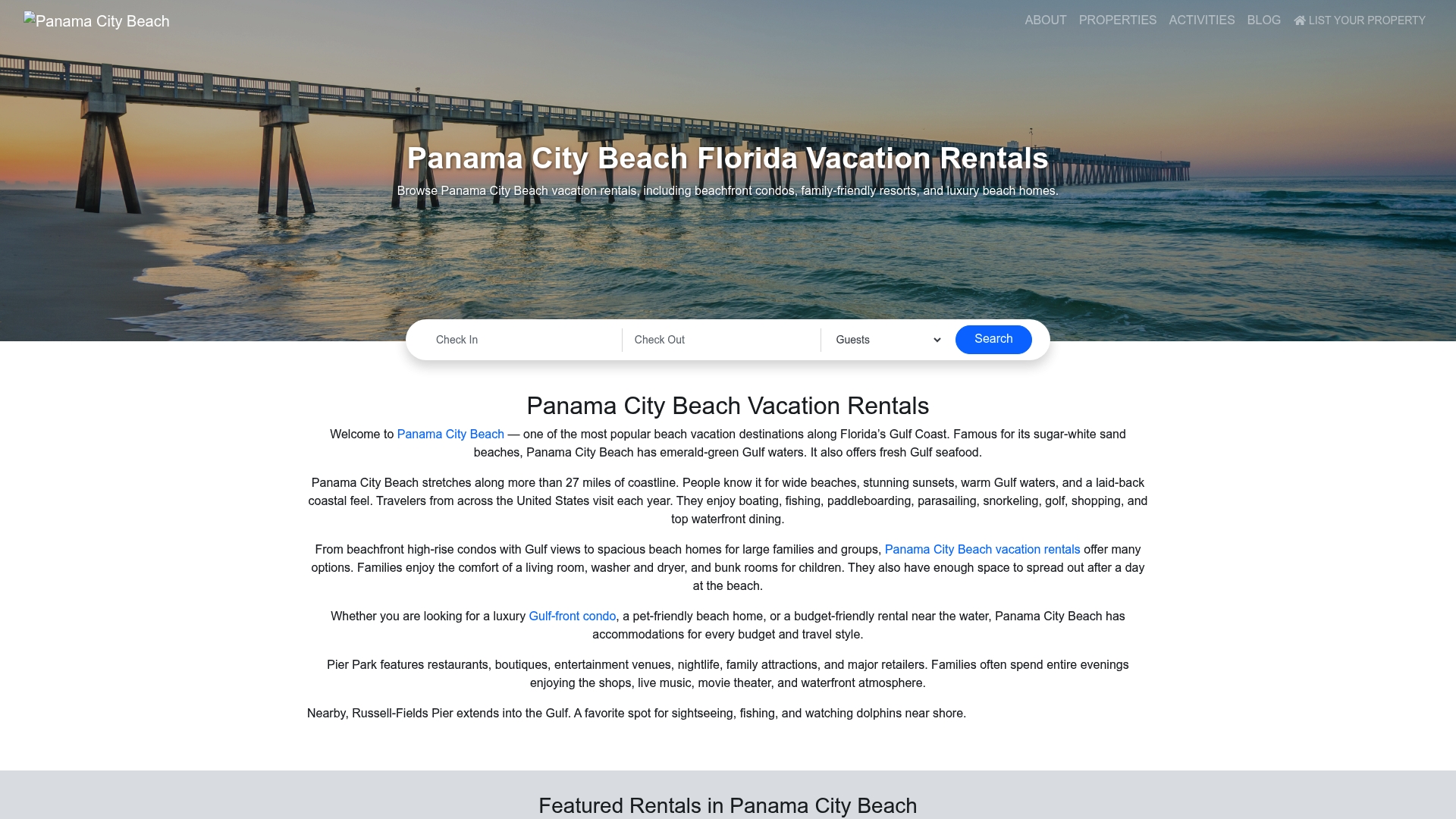
Before you book, use the Vacation Rentals search page to narrow down properties, then message the owner or manager directly to confirm cancellation terms and evacuation-zone status. This kind of direct communication, without extra service fees layered on by third-party platforms, means you’re not stuck waiting in a support queue if a storm forecast changes your plans. Once you’ve confirmed a property’s storm policy, save the manager’s contact number offline and browse current listings to lock in your dates while good ones are still available.
Sources
- NOAA maintains prediction for below-normal Atlantic hurricane season | National Oceanic and Atmospheric Administration
- NHC: About the cone
- Evacuation Zones | Bay County, FL
- Ready
Recommended
- Best Time to Visit Panama City Beach, Florida
- 4 Best Months for Panama City Beach Weather: Warm Water and Low Crowds

About the Author
Joe Godar of the PanamaCityBeachFlorida.com Editorial Team creates destination guides, vacation-planning resources, and local travel content focused on Panama City Beach, Florida.
Our team researches local beaches, vacation rental trends, family activities, restaurants, attractions, events, and direct-booking best practices. Every guide is created to help travelers plan more confidently, experience the best of Panama City Beach, and avoid unnecessary third-party guest service fees.
PanamaCityBeachFlorida.com is part of the Emerald Coast by Owner marketing family, connecting travelers directly with verified vacation rental hosts throughout the Gulf Coast since 2016.
This article was reviewed for accuracy and updated using local destination research and current Panama City Beach vacation rental market insights.