
Booking direct means you reserve and pay with the owner or the rental company that manages the home, not through a middleman site. You can do it safely if you do four things before paying: confirm the property and the person are real, check the Florida license, pay by credit card, and keep the agreement in writing. This guide walks you through each step for a Panama City Beach condo or beach house.
TL;DR
- Search the address together with the owner or company name, and add words like “complaint” or “scam” before you pay.
- Check that the unit appears in Florida’s public database of licensed vacation rentals.
- Pay by credit card, never by wire transfer, gift card, cryptocurrency or a prepaid card.
- Treat a price far below similar Gulf-front rentals, or pressure to decide fast, as a reason to stop.
- Get the terms, fees and cancellation rules in writing and keep every message and receipt.
Table of Contents
- What booking direct actually means
- Step 1: Confirm the listing is real
- Step 2: Read the listing like a skeptic
- Red flags that should stop you
- Step 3: Pay in a way you can undo
- Step 4: Get everything in writing
- A 15-minute checklist before you pay
- Find a rental to book direct
- If something goes wrong
- FAQ
- Sources
What booking direct actually means
When you book direct, the agreement is between you and the party that controls the property: the owner, or the property manager acting for the owner. You talk to that person before and during your stay. If the A/C struggles at 9 p.m. in July, you know who to call.
That contact is the main appeal. Direct bookings can also avoid some of the added service fees that large booking platforms charge, which is why many guests look for them. But the trade-off is real: on a large platform, the platform stands between you and a stranger. When you book direct, you have to do some of that checking yourself. The good news is that it takes about 15 minutes and the steps are the same ones consumer-protection agencies recommend. Our own walkthrough, verify a Panama City Beach vacation rental in 15 minutes, covers the same ground in checklist form.
Direct also comes in several shapes, and the safety steps differ a little:
- A property management company with a website, an office and many homes. Easiest to verify, because there is a business record and a track record.
- An individual owner renting a single condo. Often friendly and flexible, but you must confirm they truly own it.
- A marketplace that connects you with owners, where you message the owner and book with them. Check who actually takes your payment and under what terms before you pay.
For the owner route, see Panama City Beach rentals by owner for how that kind of booking tends to work.
Step 1: Confirm the listing is real
Most vacation-rental fraud starts with a listing that looks perfect and does not exist, or exists but belongs to someone else. The Federal Trade Commission suggests searching the address along with the owner or rental company name. If the same photos and description show up under different names or at different addresses, that can signal a scam.
A practical sequence:
- Search the address and the name together. Add “complaint,” “review” or “scam.” The FTC advises doing this before you pay.
- Run a reverse image search on the photos. If the same living room appears in a listing in another state, walk away. This is common sense rather than a rule from one agency, so treat it as an extra check.
- Look at the company’s own website. A real management company has a working site, a local phone number and consistent contact details.
- Ask for a video call or a live walkthrough. The FTC notes that seeing the place, in person, through someone you trust, or by video, helps, though a tour is no guarantee on its own.
- Verify who owns it. For a private owner, the FTC says you can check city or county tax-assessment records and compare the person’s ID with them. In Bay County, that means the county property appraiser’s records, which are public.
The North Carolina Real Estate Commission adds a useful rule for any case where someone else is holding your money: independently verify that the person or firm is a real attorney, licensed real estate broker, or the true property owner, and confirm their identity and contact details from public records rather than from the listing itself.
Check the Florida license
This step is specific to Florida and it is quick. The state’s Division of Hotels and Restaurants publishes a searchable database of licensed vacation rentals that shows the address of each licensed condo or dwelling and refreshes daily. The division says the tool is meant to help guests confirm a unit is properly licensed as a public lodging establishment.
Search the exact address, including the unit number for condos. If the property is not listed, ask the owner or manager why. There may be a simple explanation, such as a recent change, but you should have it in writing before you send money.

Step 2: Read the listing like a skeptic
The Georgia Attorney General recommends reading the property description, host profile, reviews, cancellation policy, refund policy and location information before booking. For a Panama City Beach rental, that translates into specific questions:
- Is the address or at least the complex name given? A “Gulf-front condo” with no building name is hard to verify.
- Do the photos match the location? Look at the view, the balcony railing, the pool deck. If a listing says beachfront, the photos should show sand from the balcony.
- How old and how detailed are the reviews? The North Carolina Real Estate Commission lists absent or very short reviews among its red flags.
- Are the house rules, pet policy, parking and checkout times spelled out? Real hosts answer these without fuss. If you travel with a dog, our pet-friendly beach homes are listed with that in mind.
- Does the self check-in process make sense? A legitimate listing explains how you get in. Our guide to self check-in rental listing details shows what a complete description includes.
Red flags that should stop you
Official sources agree on the main warning signs. Use this table as a pre-payment check.
| Red flag | Why it matters | Who flags it |
|---|---|---|
| Price far below comparable local rentals | Scammers use bargains to rush you | FTC, NC Real Estate Commission |
| Pressure to decide quickly | Urgency blocks careful checking | FTC, NC Real Estate Commission |
| Request to pay outside the booking site | Moving off-platform removes protections | Ohio Attorney General |
| Wire transfer, gift cards or cryptocurrency for a deposit | Hard or impossible to recover | Ohio Attorney General |
| Fake photos or poor grammar | Copied listings are often badly written | Ohio Attorney General, NC Real Estate Commission |
| Money requested before a written agreement | No proof of the deal | NC Real Estate Commission |
| Unusual cancellations or bogus damage-fee demands | Can be used to take more money | Ohio Attorney General |
The price check is the one most people can do easily. Look at what comparable units in the same area charge for your dates. Our PCB rental prices breakdown shows what a week typically costs, so you can tell a fair rate from an impossible one. If you want to stretch a budget the honest way, see the cheap condos guide instead of chasing a too-good deal.
Step 3: Pay in a way you can undo
Payment method is the single biggest protection you control. The Ohio Attorney General says credit cards generally offer stronger protections for disputing charges when a vacation-rental transaction goes wrong. The Georgia Attorney General likewise advises paying by credit card for listings from unvetted sources so you can dispute a fraudulent charge. The Better Business Bureau adds that you should avoid wire transfers and prepaid cards and save receipts and correspondence.
In practice:
- Use a credit card for the deposit and the balance whenever the owner or company accepts one.
- Say no to wire transfers, gift cards, cryptocurrency and cash apps for a deposit, even if the owner offers a “discount” for them.
- Pay the company, not a person’s personal account, when the rental is managed by a business. If the payee name does not match the agreement, ask why.
- Pay in stages the contract describes. A deposit now and a balance before arrival is normal. A request for the full amount through a new channel after you have already agreed on one is not.
If a host asks you to leave the platform
This is the classic move. You find a home on a booking site, then the “owner” asks you to continue by email or text and pay elsewhere. The Georgia Attorney General and the North Carolina Real Estate Commission both advise that when you use a platform, keep communications and payments on it, because moving off-platform can remove its protections.
That is different from booking direct on purpose. Choosing direct from the start, with a verified owner or company, a written agreement and a credit card, is a legitimate decision. Being talked out of a protected booking halfway through is the warning sign.
Once you have a confirmation, you will probably share it with the people traveling with you. Be careful what goes into the group chat: a guide on sharing booking screenshots without payment details explains how to hide card numbers and account information.
Step 4: Get everything in writing
The Ohio Attorney General recommends reviewing all contract terms, cancellation rules and added fees, keeping the agreement, documenting your contacts, and confirming a third-party reservation directly with the resort or hotel. It also advises checking phone numbers and links carefully, since scammers create fake websites and fake customer-support numbers, and putting verbal promises in writing.
Before you pay, make sure the written agreement states:
- the exact address and unit number
- the dates, check-in and checkout times
- total price, including cleaning fees, taxes and any resort or amenity fees
- the deposit, the due date for the balance, and the cancellation and refund terms
- the maximum number of guests, the pet policy, and the damage or security deposit rules
- the name, phone number and email of the owner or manager
Save the listing as a PDF or screenshot, too. Listings change, and you want proof of what you booked. If the home is in a condo building, ask the owner or manager whether the building has rules on guests, parking passes or pool access, and get the answer in writing.
A 15-minute checklist before you pay
- Search the address plus the owner or company name, with “scam” and “complaint.”
- Look up the address in the Florida licensed vacation rental database.
- Check that the company’s website, phone number and email match across the listing and the agreement.
- Confirm ownership through public records if it is a private owner.
- Ask for a live video tour or a recent photo of the unit.
- Compare the price with similar rentals for your dates.
- Read the cancellation, refund and damage-deposit rules.
- Pay by credit card and keep the receipt.
- Save the agreement and all messages.
Our take on booking direct
We built our site around one idea: you should be able to deal with the person responsible for your stay. On our marketplace you can browse beachfront condos, Gulf-front homes, family-friendly rentals and pet-friendly homes, and communicate and book directly with property owners. That direct line is designed to help you avoid extra service fees you may see on the big booking platforms, and it means your questions about parking, pool hours or a pet go to someone who knows the answer.
Direct only works when you feel confident, so we encourage every guest to do the checks in this guide, whichever rental they choose. Ask your questions, get the answers in writing, pay by credit card and check the license. A good owner or manager welcomes this. It is how a smooth Gulf Coast week begins, with no surprises at the door.
Joe
Find a rental to book direct
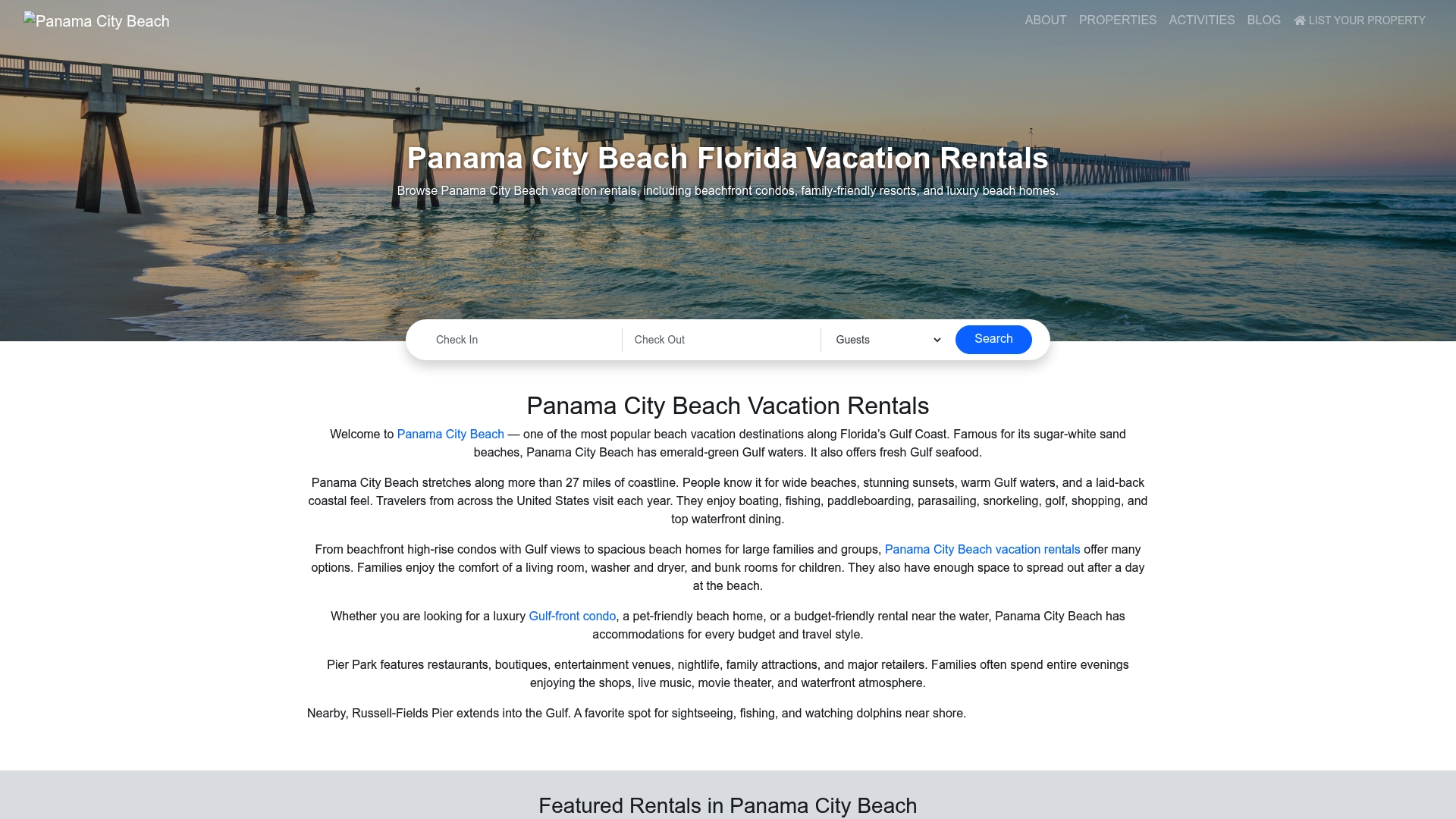
If you are ready to look, start with our Panama City Beach vacation rentals: beachfront condos, Gulf-front homes, family-friendly rentals and private homes with pools, all with direct contact with the property owner. Open a listing, read the details, then use the checklist above before you pay.
Want to compare companies first? Our rundown of condo rental companies in Panama City Beach helps you understand your options, and the direct booking benefits page explains why many guests prefer to skip the middleman.
If something goes wrong
Act fast. Speed improves the chance of getting money back, though nothing guarantees it.
- Contact your card issuer, bank or payment service right away. Apartment List’s guidance says to ask whether the payment can be stopped, disputed or recalled, and that quick action improves the odds without promising recovery.
- Report it. The FTC says to tell local law enforcement, the website where the ad ran, ReportFraud.ftc.gov and your state attorney general. The North Carolina Real Estate Commission also lists the FBI’s internet-crime reporting service and, where appropriate, the real owner or manager.
- Protect your identity if you shared ID details. Apartment List points to IdentityTheft.gov and suggests considering a fraud alert or credit freeze.
- Keep the evidence: the listing, messages, screenshots, receipts, names and contact details.
If you find a rental on a trip you have already booked is not legitimate, contact the actual property manager or owner, if one exists, to confirm whether any reservation exists in your name.
Sources
- Rental Listing Scams, Federal Trade Commission
- Vacation Rental Fraud Scam Alert, North Carolina Real Estate Commission
- Avoiding Summer Vacation Rental Scams, Georgia Attorney General
- Vacation-rental scams and how to avoid them, Ohio Attorney General
- How to spot this common vacation rental scam, Better Business Bureau
- Rental Scams: Red Flags and How to Avoid Them, Apartment List
- Division of Hotels and Restaurants, Florida DBPR
- Sharing booking screenshots without payment details
Recommended
- Benefits of Booking Direct for Panama City Beach Rentals
- Panama City Beach Rentals by Owner: 2026 Guide
- 3 Listing Details for Panama City Beach Self Check In Rentals
- Beachfront Condo Rentals in Panama City Beach, FL

About the Author
Joe Godar of the PanamaCityBeachFlorida.com Editorial Team creates destination guides, vacation-planning resources, and local travel content focused on Panama City Beach, Florida.
Our team researches local beaches, vacation rental trends, family activities, restaurants, attractions, events, and direct-booking best practices. Every guide is created to help travelers plan more confidently, experience the best of Panama City Beach, and avoid unnecessary third-party guest service fees.
PanamaCityBeachFlorida.com is part of the Emerald Coast by Owner marketing family, connecting travelers directly with verified vacation rental hosts throughout the Gulf Coast since 2016.
This article was reviewed for accuracy and updated using local destination research and current Panama City Beach vacation rental market insights.