
Dolphin Boat Ramp and Oriole Street Boat Ramp are the two primary public launch points serving Panama City Beach, backed up by a handful of nearby county and park ramps, including B.V. Buchanan, McCall-Everitt, Shoreline Circle, Carl Gray Park, and Snug Harbor. This guide covers what each one offers, how to prep your rig before you back down the slope, the Florida safety rules you can’t skip, and exactly where to double-check hours, docks, and closures before you leave the driveway.
TL;DR:
- Most ramps lack detailed operational information like hours and fees, so verifying conditions through direct calls or recent updates is essential.
- Boaters must carry current registration, wear approved PFDs, and check tide conditions to ensure safe and compliant launching, especially in saltwater.
- Tide, weather, and storm damage can cause closures or maintenance at ramps, making recent update checks crucial before heading out.
- Accessibility features are not always clearly listed; contacting park offices beforehand is recommended for those needing ADA-compliant ramps.
- Launching from well-chosen locations close to lodging or fuel services can save time, especially if done during off-peak hours on weekdays or early mornings.
Table of Contents
- Boat Ramps Panama City Beach: Where to Launch and What to Expect
- Launch Checklist: How to Pick the Right Ramp and Pack Smart
- Safety and Legal Basics Every Boater Needs to Know
- How to Verify Ramp Hours, Facilities, and Closures Before You Go
- Accessibility Features You Should Ask About
- Environmental Rules and Local Regulations to Know Before You Launch
- Ramp Maintenance and Why Closures Happen More Than You’d Think
- What’s Nearby: Fuel, Rentals, and Repairs
- Local Perspective: Timing and Ramp Choice Make the Difference
- Boater-Friendly Lodging Near the Ramps
- Sources
- FAQ
Boat Ramps Panama City Beach: Where to Launch and What to Expect
If you’re hunting for public boat ramps near Panama City Beach, start with the two Bay County lists as saltwater, non-commercial launches directly serving the beach corridor. From there, several nearby park ramps expand your options depending on which side of the bay you’re working from.
Here’s what you’re working with:
- Dolphin Boat Ramp — 3700 Dolphin Drive. Bay County classifies this as saltwater, non-commercial access, making it one of the go-to spots for boaters staying on the beach side. The county directory doesn’t publish hours, lane counts, or launch fees for this ramp, so call ahead if any of that matters for your trip.
- Oriole Street Boat Ramp — Oriole Street. Also listed as saltwater, non-commercial by the county. Same caveat applies: no published fee schedule or restroom data, so treat the listing as a starting point, not the full picture.
- B.V. Buchanan Park boat ramp — Laird Park Road. Bay County’s facilities directory confirms this park has a boat ramp, dock, and picnic areas, which makes it a reasonable pick if your crew wants somewhere to hang out after the boat’s in the water.
- McCall-Everitt (Mc-Everitt) Boat Ramp — This one shows up in county repair records tied to post-storm rebuilding work, and visitor pages reference both northbay and Deerpoint Lake variants. Confirm which access point you’re headed to before you drive out, since the name covers more than one location.
- Shoreline Circle boat ramp — A smaller, frequently mentioned launch point on local visitor pages. Facility details aren’t standardized across sources, so verify current condition before counting on it for a trailer with any real length.
- Carl Gray Park boat ramp — Another park-based ramp commonly listed on visitor and tourism pages serving boaters in the broader Panama City area.
- Snug Harbor Public Boat Launch — Rounds out the list of ramps visitors ask about most, though like several others here, published operating details are thin.
Notice a pattern? Most of these ramps have solid classification data (saltwater or freshwater, commercial or non-commercial) but skimpy operational details. That’s not a knock on the county. It’s just how these directories are built, and it means the burden falls on you to verify restroom access, launch fees, and hours before you commit a Saturday morning to a specific ramp.
Launch Checklist: How to Pick the Right Ramp and Pack Smart
Choosing the right ramp starts well before you hitch the trailer. Match your boat’s size and your trip’s demands to what each location can actually handle.
Before you leave the driveway, confirm:
- Vessel registration and proof of ownership are onboard and current, along with insurance paperwork if you carry it.
- A wearable PFD for every person aboard, plus a Type IV throwable if your vessel is 16 feet or longer, per FWC requirements.
- Trailer fit: check your trailer’s width and tongue length against the ramp’s slope. Steeper ramps demand slower backing and more clearance awareness, especially with a longer tongue.
- Tide and current conditions for any saltwater launch. Panama City Beach ramps sit in tidal water, and a falling tide can leave you fighting mud at the ramp edge.
- Parking and peak hours: weekend mornings get crowded fast. Know where trailer parking is before you arrive, not after.
At the ramp itself, the sequence is simple: stage your vehicle in line, prep your lines and motor while you wait, back down slowly and deliberately, then repark and secure your trailer promptly so the next boater isn’t stuck waiting on you.
Pro Tip: Walk down to the ramp on foot before you back your trailer in, especially at a ramp you haven’t used before. A quick look at the slope, water depth, and any debris near the edge saves you from an ugly surprise halfway down.

Safety and Legal Basics Every Boater Needs to Know
Florida takes personal flotation devices seriously, and so should you. Every person aboard needs a wearable, USCG-approved PFD, and any vessel 16 feet or longer must also carry an immediately accessible Type IV throwable device, per FWC boating regulations.
Required aboard: One wearable PFD per person, plus a Type IV throwable device for vessels 16 feet and up. This isn’t a suggestion. It’s the baseline FWC enforces on Florida waters.
Registration matters just as much. Florida law requires vessels operating on state waters to carry current registration and display the registration number as spelled out in Florida Statutes §328.48. If you’re trailering in from out of state, confirm your home registration satisfies Florida’s display requirements before you launch.
A few practical habits round this out: wear your PFD while you’re loading and launching, not just once you’re underway. Watch for boat traffic and current near the ramp itself, since that’s where most close calls happen. And give your trailer coupler, safety chains, and tires a once-over before you hit the road, not after you’re already merging onto Front Beach Road.

How to Verify Ramp Hours, Facilities, and Closures Before You Go
Don’t trust a single source blindly, especially for a ramp you haven’t used before. Layer your research across a few official tools.
- Bay County’s boat ramp directory gives you official names and classification (saltwater vs. freshwater, commercial vs. non-commercial), but it stops short of hours, fees, or trailer capacity.
- Bay County’s GIS boat-ramps layer goes deeper, with fields for RESTROOM, BOAT_DOCK, RAMP_NUM, and LAST_EDIT_DATE. That last field matters more than people realize. Checking it tells you whether the listing reflects recent repairs or closures.
- FWC’s Boating and Angling Guides add area maps and local fishing rules, useful if your trip includes casting a line once you’re on the water.
If any detail you need is still missing, call the park office directly. It takes five minutes and beats discovering a ramp is closed for repairs after you’ve already driven out with a loaded trailer.
Accessibility Features You Should Ask About
Not every boat ramp in Bay County has the same level of accessibility, and published directories don’t always spell out ADA-specific features like transfer platforms, accessible parking spaces, or firm, stable surfaces leading to the water. If you or someone in your group uses a mobility device, don’t assume a listed ramp meets accessibility standards just because it’s public.
Your best move is a direct call to the park office or Bay County Parks and Recreation before you plan a trip around a specific ramp. Ask specifically about accessible parking proximity to the ramp, surface conditions on the approach, and whether any dock sections include accessible transfer points. Ramps attached to larger parks, like B.V. Buchanan, tend to have more developed infrastructure, including paved parking and picnic areas, which often (though not always) correlates with better accessibility overall.
This is one area where the gap between what’s listed and what’s actually built matters. A ramp can be technically public and still present real barriers for someone using a wheelchair or walker. Since neither the county directory nor the GIS layer currently flags ADA compliance as a searchable field, verification by phone remains your most reliable option. If accessibility is a deciding factor in your trip planning, build that phone call into your prep the same way you’d check tide charts or trailer clearance.

Environmental Rules and Local Regulations to Know Before You Launch
Panama City Beach sits along an ecologically active stretch of the Gulf Coast, and that shapes what you can and can’t do at the ramp and beyond it. Seagrass beds, oyster reefs, and shallow flats near several launch points mean idle speed zones and no wake areas aren’t just polite suggestions. They’re enforced protections for habitat that supports the local fishery you’re probably hoping to enjoy.
Local regulations also touch on where you can clean fish, how you dispose of bait and trash, and what you do with bilge water before it hits the bay. Dumping anything beyond clean water at a public ramp isn’t just bad etiquette. It can violate state environmental rules tied to water quality protection in these estuarine systems.
FWC’s regional boating guides are worth checking before your trip because they layer environmental notes on top of standard navigation maps, flagging protected zones and seasonal fishing restrictions specific to the area you’re launching into. That’s more useful than a generic travel list, since rules can shift by zone within the same bay system. If you’re boating with kids or first timers, take two minutes at the ramp to point out any posted signage about manatee zones or seagrass protection. It’s a small habit that keeps you compliant and keeps the water healthy for the next trip.
Ramp Maintenance and Why Closures Happen More Than You’d Think
Boat ramps take a beating. Constant exposure to saltwater, boat traffic, and Gulf Coast storms means Bay County’s ramps need regular upkeep, and that upkeep sometimes means a ramp you were counting on is temporarily out of service.
County repair records tied to post storm rebuilding, including work referenced for Dolphin, Highpoint, McCall-Everitt, and David W. Hutchinson ramps, show this isn’t hypothetical. Storm damage from major hurricanes has forced ramp repairs and extensions across the county in recent years, and that pattern of intermittent closures is likely to continue given how exposed these facilities are to Gulf weather.
The practical takeaway: never assume a ramp is open just because it appeared in a search result or a friend used it last summer. Checking the GIS layer’s last edit date before you leave gives you a reasonable signal that the listing reflects current conditions rather than outdated information. If a ramp shows a stale edit date or you can’t confirm recent activity, a quick call to the county or park office clears up the uncertainty in a couple of minutes. That’s a far better use of your time than arriving to a barricaded ramp with a loaded trailer and no backup plan.
What’s Nearby: Fuel, Rentals, and Repairs
Launching is only half the equation. Knowing where to fuel up, rent gear, or get a quick repair before or after your trip saves a scrambling phone search once you’re already on the water or stuck at the dock.
Panama City Beach and the surrounding Bay County area support a working boating community, which means fuel docks, tackle shops, and marine repair services cluster near the busier waterways rather than right at every ramp. If you’re launching from Dolphin or Oriole Street, plan your fuel stop before you back down the ramp rather than assuming you’ll find one nearby afterward. Marinas along the bay side of the beach typically handle fuel, bait, and basic repairs, while boat rental operations tend to concentrate closer to the main tourist corridor for easy pickup and drop off.
If you’re bringing your own boat and something needs attention before a return trip, a quick call ahead to a local marina or marine service shop beats discovering a mechanical issue is bigger than expected while you’re standing at the ramp. Many visiting boaters, particularly those driving in from Louisiana or elsewhere in the Gulf South, find it easier to identify a marina near their launch point in advance rather than searching once they’ve already arrived with a full trailer and a tight schedule.
Local Perspective: Timing and Ramp Choice Make the Difference
Family launches do better at Dolphin or B.V. Buchanan, where docks and picnic areas ease the chaos of loading kids and gear. Larger offshore boats tend to need more ramp room and better trailer clearance, which pushes toward less crowded options like Shoreline Circle or Carl Gray Park depending on the day.
Early mornings and weekdays beat weekend afternoons every time. And when you’re staging at a busy ramp, single-file courtesy and clearing the lane quickly once you’re parked keeps everyone’s morning moving. If lodging near the water matters to your trip, Panama City Beach’s vacation rental options span the whole coastline, which helps when you’re trying to minimize drive time to an early launch.
— Joe
Boater-Friendly Lodging Near the Ramps
Panama City Beach vacation rentals give boaters something a hotel can’t: a driveway, real trailer parking, and a shorter drive to an early morning launch. When you’re trying to be at Dolphin or Oriole Street before the crowds show up, cutting even fifteen minutes off your commute from lodging to ramp makes a real difference, especially with a loaded trailer and coffee that’s still too hot to drink.
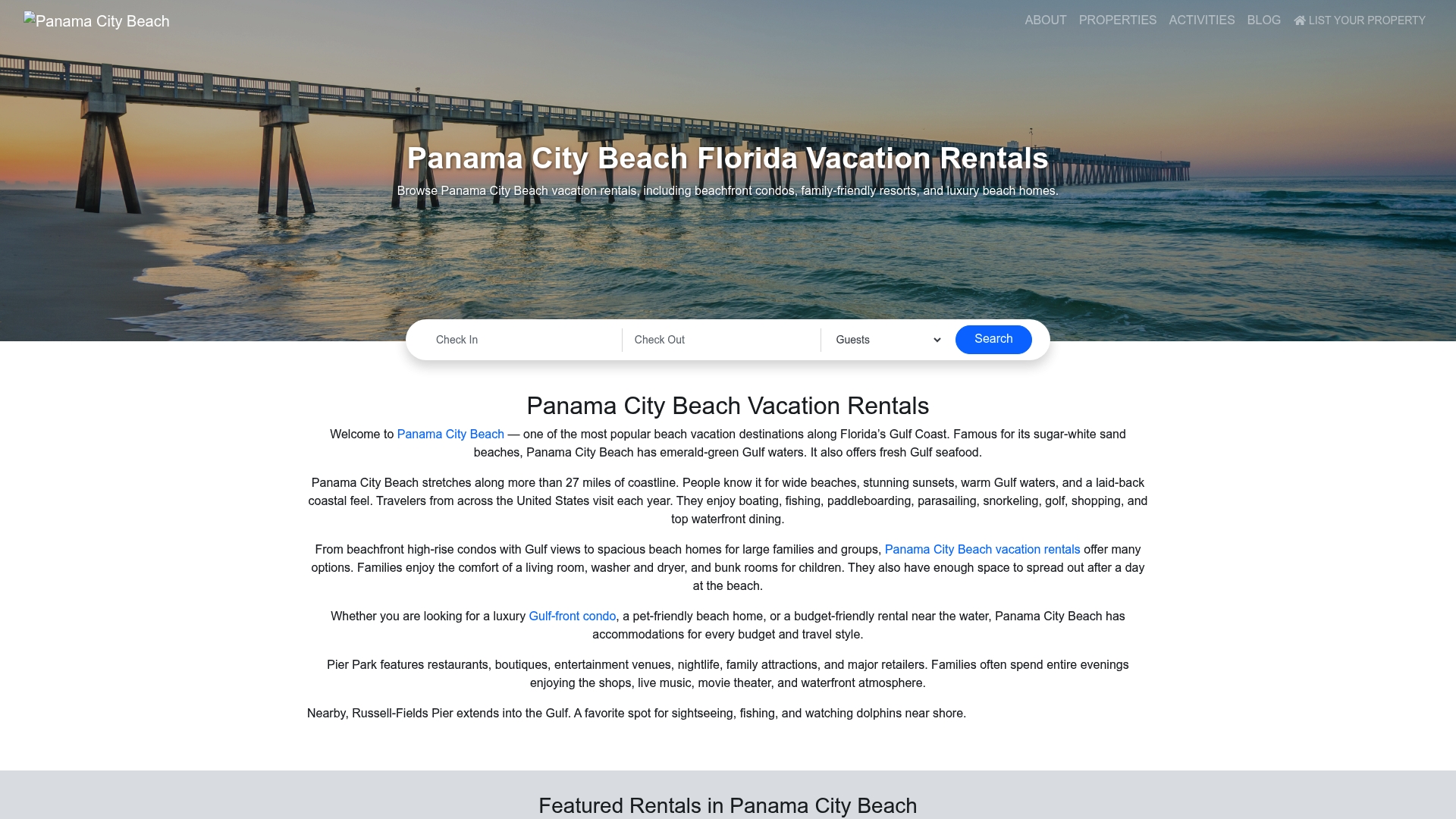
Browsing Panama City Beach vacation rentals lets you filter for the features that matter most to a boating trip: driveway or off-street parking that fits a trailer, proximity to the ramp you’re planning to use, and secure parking if you’re leaving gear locked up overnight. The platform connects you with property owners, which can help avoid additional service fees common on larger booking platforms, and offers a variety of beachfront condos, gulf-front homes, and pet-friendly properties to suit different travel needs. If your next trip depends on an early start at the water, check available Panama City Beach rentals now and lock down a place that keeps your morning simple.
Sources
- Boat Ramp Locations | Bay County, FL
- Community Locations • Bay County, FL • CivicEngage
- Boating regulations | Florida Fish and Wildlife Conservation Commission
- Layer: Boat Ramps (ID: 3) • Bay County GIS
- Florida Statutes §328.48 — Vessel registration; application; certificate; number; decal; duplicate certificate
Recommended
- Nearly 100 Access Points: Panama City Beach Map, Parking & Local Tips
- Best Piers for Pier Fishing in Panama City Beach
About the Author
Joe Godar of the PanamaCityBeachFlorida.com Editorial Team creates destination guides, vacation-planning resources, and local travel content focused on Panama City Beach, Florida.
Our team researches local beaches, vacation rental trends, family activities, restaurants, attractions, events, and direct-booking best practices. Every guide is created to help travelers plan more confidently, experience the best of Panama City Beach, and avoid unnecessary third-party guest service fees.
PanamaCityBeachFlorida.com is part of the Emerald Coast by Owner marketing family, connecting travelers directly with verified vacation rental hosts throughout the Gulf Coast since 2016.
This article was reviewed for accuracy and updated using local destination research and current Panama City Beach vacation rental market insights.