
Alternatives to Airbnb for hosts are platforms and methods that reduce fees, reach new guest audiences, and grow rental revenue beyond what a single platform can deliver. Alabama hosts with Gulf Coast properties, lake cabins, or mountain retreats near the Appalachians face the same challenge: Airbnb’s host-only fee reaches 15.5%, which cuts directly into your bottom line. The good news is that a multi-platform strategy combined with direct booking channels gives you more control, more guests, and more income. This guide covers the best vacation rental platforms, pricing strategies, and practical steps to build a stronger hosting business in 2026.
What are the main alternatives to Airbnb for hosts?
The short-term rental industry, also called the vacation rental market, now offers hosts a wide range of distribution channels beyond a single platform. Each channel targets a different guest type, charges different fees, and suits different property types. Knowing the differences lets you pick the right mix for your listing.
Vrbo is the most cost-effective major platform for whole-home rentals. Total host fees sit around 8%, compared to Airbnb’s 15.5%. On a $550 booking, you keep $506 on Vrbo versus $464.75 on Airbnb. That $41 difference adds up fast across a full season. Vrbo caters mainly to families and groups seeking whole-home rentals with longer stays, and it excludes shared or private room listings entirely.
Booking.com charges hosts approximately 15% commission, similar to Airbnb. Its strength is international reach, which matters if your property attracts travelers from outside the United States. The platform suits urban condos and coastal properties that draw international visitors.
Furnished Finder operates on a completely different model. Hosts pay a flat annual fee of about $99 with no commission taken from rental payments. The platform targets travel nurses, corporate relocations, and remote workers who need stays of 30 days or more. For Alabama hosts near major medical centers in Birmingham or Huntsville, this channel fills calendar gaps that short-term platforms often miss.
Regional and niche platforms round out the picture. Hipcamp connects outdoor-focused hosts with campers and glamping guests. Direct booking websites, covered in detail below, eliminate OTA fees entirely.
Here is a quick comparison of the major host-friendly booking sites:
| Platform | Host fee model | Best property type | Typical guest |
|---|---|---|---|
| Vrbo | ~8% total fee | Whole homes, cabins | Families, groups |
| Booking.com | ~15% commission | Condos, urban units | International travelers |
| Furnished Finder | ~$99/year flat fee | Houses, apartments | Travel nurses, corporate |
| Hipcamp | Per-booking fee | Outdoor, land, glamping | Campers, adventurers |
| Direct booking site | 0% OTA commission | Any property type | Returning guests |
Pro Tip: Listing on both Vrbo and a direct booking site covers two of the highest-value channels with the lowest combined fee burden. Start there before adding more platforms.
How can hosts increase income with dynamic pricing?
Dynamic pricing is a revenue strategy where nightly rates adjust automatically based on demand, local events, competitor rates, and seasonal trends. It differs from static pricing, where you set one rate and leave it. Machine learning-powered dynamic pricing can increase rental income by 10% to 40% compared to static models. That range reflects property type and market demand, but even a 10% gain on a $40,000 annual revenue property adds $4,000 per year.
The key is combining dynamic pricing software with your own market knowledge. Using dynamic pricing tools alongside manual adjustments yields better results than relying on automation alone. Software misses local context. You know when the Hangout Music Festival in Gulf Shores draws crowds, or when a major Alabama football weekend spikes demand across the state.
Beyond nightly rates, ancillary revenue streams boost host income significantly. Hosts who treat their property as a service platform rather than just a bed generate more stable revenue year-round. Practical add-ons include:
- Airport pickup and drop-off fees for guests flying into Pensacola or Birmingham
- Grocery pre-stocking packages arranged before guest arrival
- Early check-in and late checkout fees priced at 20–30% of the nightly rate
- Workspace rental add-ons for remote workers who need a dedicated desk setup
- Local experience packages such as fishing charters, paddleboard rentals, or guided tours
Each of these turns a one-time booking into a higher-value stay. Guests pay for convenience, and you earn more without raising your base nightly rate.
Why does multi-platform distribution outperform single-platform hosting?
Relying on one platform puts your entire income at risk from a single algorithm change, policy update, or fee increase. Listing across multiple platforms shields hosts from income volatility caused by exactly these kinds of changes. A two-to-three platform strategy is the sweet spot. It maximizes booking exposure without creating unmanageable calendar complexity.
Direct booking channels eliminate OTA service fees ranging from 3% to 15% and build guest loyalty through your own marketing. A returning guest who books directly costs you nothing in commission. Over time, a base of loyal repeat guests reduces your dependence on any platform entirely. Direct booking represents the highest-leverage revenue growth opportunity for hosts in 2026 because it retains full commission and builds relationships that platforms cannot replicate.
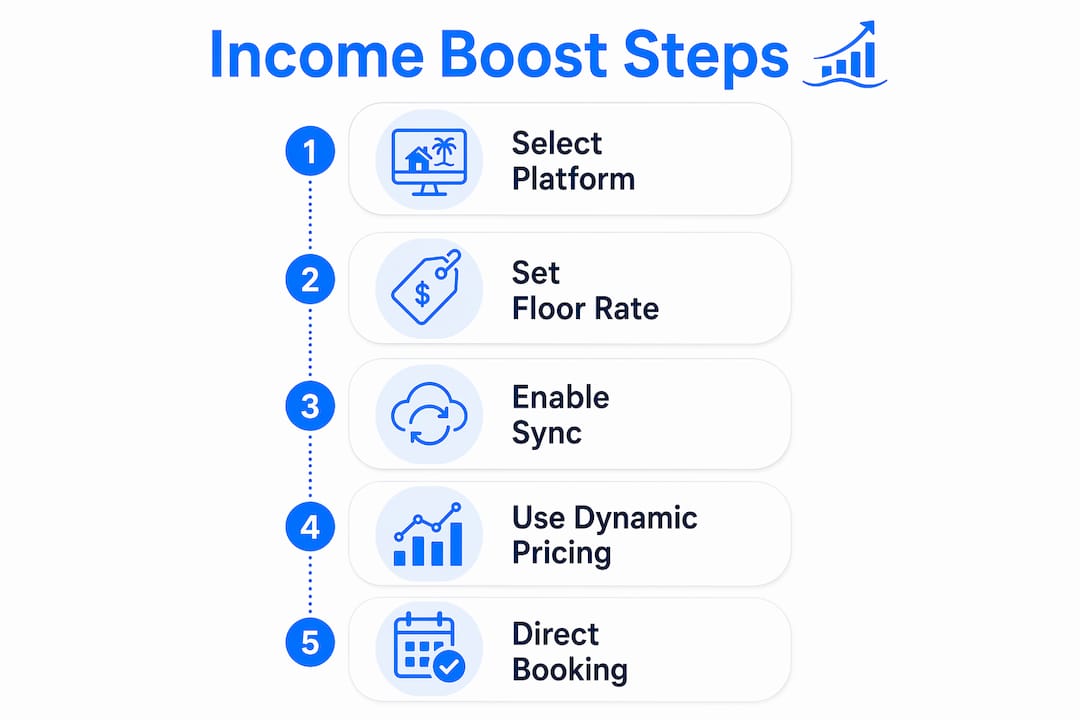
Here is a practical sequence for building a multi-channel hosting strategy:
- Audit your current platform fees. Calculate exactly what you pay per booking on each platform. Use the $550 booking example: Vrbo returns $506, Airbnb returns $464.75. Know your numbers before adding channels.
- Add a second platform that targets a different guest type. If you list on a broad platform today, add Furnished Finder for mid-term stays or a niche outdoor platform for a different audience.
- Build a direct booking website. A simple site with a payment processor and calendar integration is enough to start. Successful hosts integrate a direct booking site supported by a channel manager to synchronize calendars and automate messaging.
- Install a channel manager with iCal synchronization. Channel managers using iCal sync allow you to manage multiple listings across platforms and avoid double bookings. Technical barriers are low in 2026, and most tools connect in under an hour.
- Set up guest screening and a pricing framework. Screen guests consistently across all platforms. Price based on local occupancy data, not just platform suggestions.
Pro Tip: Send every guest a post-stay email with a direct booking link and a small discount for their next visit. This single habit converts OTA guests into direct bookers over time.
How to practically implement listing alternatives and maximize returns
Choosing the right platforms starts with your property type and local market. A whole-home beach house near Gulf Shores attracts families who search on Vrbo. A furnished condo near a hospital district in Birmingham fills faster on Furnished Finder. Match the platform to the guest, not the other way around.
Once you select your platforms, synchronization is non-negotiable. A double booking damages your reputation on every platform simultaneously. Use a channel manager to push availability updates in real time across all listings. Most channel managers also centralize guest messaging, which saves hours each week.
Your direct booking website needs three things to function well: a reliable payment processor, a live calendar that syncs with your other platforms, and a clear reason for guests to book directly. That reason is usually a small discount, a free add-on, or a flexible cancellation policy you cannot offer through OTAs.
Pricing tools work best when you set floor rates manually. A floor rate is the minimum you will accept for a given night. Software handles everything above that floor based on demand signals. Following a revenue optimization framework that prioritizes tenant screening, legal market pricing, and cost-effective property upgrades before conversion to short-term rental gives you a stable foundation. Hosts who skip screening and pricing discipline often underperform even with the right platforms.
Here is a summary of implementation priorities by stage:
| Stage | Action | Tool or method |
|---|---|---|
| Platform selection | Match property type to platform audience | Research guest demographics per platform |
| Calendar sync | Prevent double bookings across all listings | Channel manager with iCal integration |
| Direct booking | Build a commission-free booking channel | Simple website plus payment processor |
| Pricing | Set floor rates, automate above them | Dynamic pricing software plus manual review |
| Guest retention | Convert OTA guests to direct bookers | Post-stay email with direct booking link |
For Florida hosts with vacation rental properties along the Gulf Coast, this framework applies directly. The Gulf Coast market sees strong seasonal demand from spring through fall, which makes dynamic pricing especially effective for maximizing peak-season revenue.
Key Takeaways
The most effective hosting strategy combines two to three platforms with a direct booking channel, dynamic pricing, and ancillary revenue streams to maximize income and reduce platform dependency.
| Point | Details |
|---|---|
| Platform fee differences matter | Vrbo’s ~8% fee returns significantly more per booking than Airbnb’s 15.5% on the same reservation. |
| Furnished Finder fills mid-term gaps | A flat $99 annual fee with no commission makes it ideal for 30-plus-day stays targeting travel nurses and corporate guests. |
| Dynamic pricing grows income | Machine learning pricing tools increase rental revenue by 10%–40% compared to static rate models. |
| Multi-platform reduces risk | Listing on two to three platforms protects income from algorithm changes on any single platform. |
| Direct booking is the highest-margin channel | Eliminating OTA fees of 3%–15% per booking and building repeat guest relationships maximizes net income over time. |
What I have learned from watching hosts over-rely on one platform
Hosts who depend entirely on one platform are one policy update away from a serious income drop. I have watched this play out repeatedly. A platform changes its search algorithm, a new fee structure rolls out, or a policy shift affects cancellation terms. Hosts with no backup channel feel every one of those changes immediately.
The hosts who weather these shifts best are the ones who built a direct booking channel before they needed it. They did not wait for a crisis. They treated their direct booking site as a long-term asset, not a backup plan. That mindset shift is the real difference between hosts who grow year over year and those who stay stuck.
The other thing I have noticed is that ancillary revenue gets dismissed too quickly. Hosts focus on nightly rates and ignore the $30 early check-in fee or the $50 grocery package. Those small amounts compound across dozens of bookings. A host running 100 nights per year who adds just $25 in average ancillary revenue per stay earns an extra $2,500 annually without changing a single platform or rate.
My honest advice: start with Vrbo if you have a whole home, add Furnished Finder if your market has healthcare workers or corporate travelers, build a direct booking site in your first six months, and install a channel manager on day one. That combination covers the most ground with the least complexity.
— Joe
Panamacitybeachflorida: a strong distribution channel for Gulf Coast hosts
Alabama hosts with Gulf Coast properties have a natural advantage. Travelers from across the Southeast make Panama City Beach one of their top destinations, drawn by 27 miles of sugar-white sand and emerald-green Gulf waters.
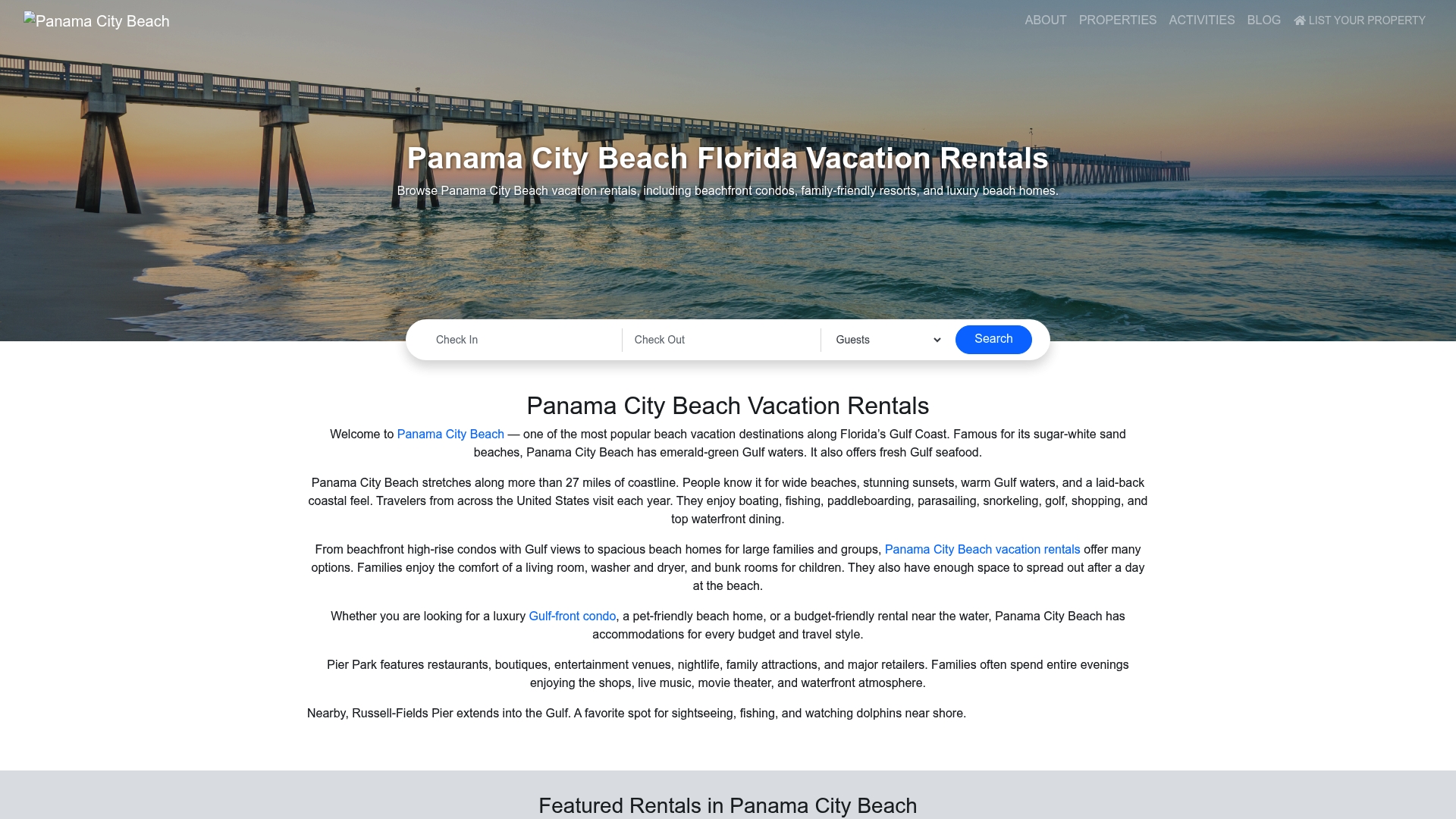
Panamacitybeachflorida gives hosts direct access to that demand. Listing your property on Panama City Beach vacation rentals puts your home or condo in front of guests who are already planning a Gulf Coast trip. The platform showcases beachfront homes and condos alongside local activities like fishing, paddleboarding, and waterfront dining, which helps guests commit to a booking faster. For hosts building a multi-platform strategy, Panamacitybeachflorida adds a regional channel with a highly targeted audience and no broad-platform fee structure eating into your earnings.